A Politics of Love Won on Election Night
On November 3, 2026, Democrats won the House and the Senate, and the winners talked about neighbors instead of enemies. What James Talarico called a politics of love, why it won in red states, and how to tell whether it lasts.
 Christopher A. Rotunno 12 min read

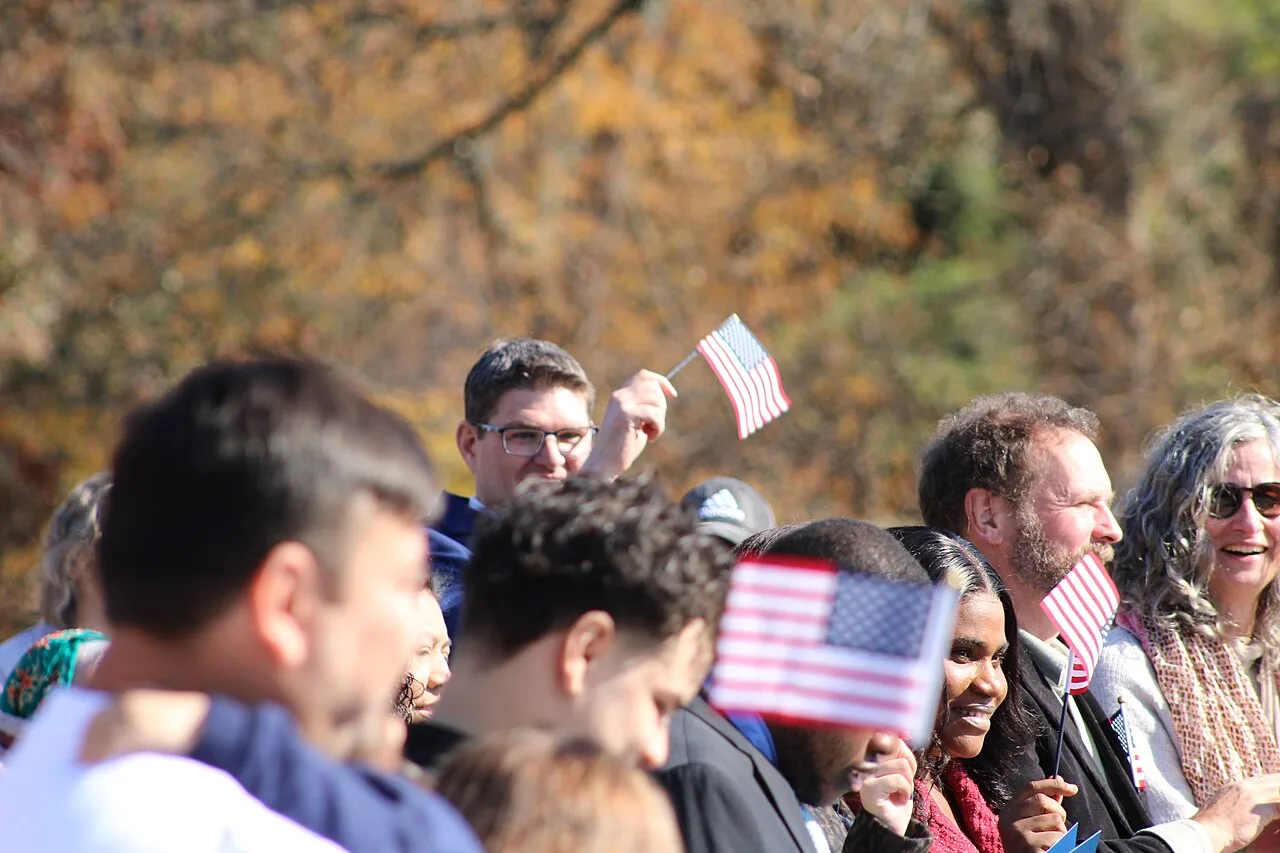
Photo: Mayur Gala (Unsplash) / CC0 / Wikimedia Commons
INFO
Commentary. Results are as reported by CBS News and NBC News on the morning of November 4, 2026. A few races were still being counted, and final numbers may shift. Numbered sources, including a Reuters World News special episode recorded the morning after, are listed at the end.
For ten years, election nights have ended the same way: one half of the country relieved, the other half furious, and everyone braced for the next fight. Last night felt different. The results were lopsided, but the tone from the winners was not about payback. It was about neighbors.
James Talarico put it in one sentence when he claimed victory in Texas: “We just showed that a politics of division is no match for a politics of love.” That idea is the real story of the night. The races that decided the Senate were won in Texas, Kansas, Iowa, and South Carolina, states that had not sent a Democrat to the Senate in years, and in Texas and Kansas in decades. By the winners’ own account, they got there with votes from people who had voted Republican, by talking about problems both sides share. Last night showed that love, practiced as politics, is not just a nice thing to say on a stage. It is a way to win.
What Happened
Democrats won control of both chambers of Congress.
- The Senate. CBS News projected Democratic control shortly after 11:30 p.m. Eastern. Democrats flipped seven Republican seats: Texas, Kansas, Ohio, Iowa, North Carolina, South Carolina, and Maine, where Troy Jackson defeated Sen. Susan Collins.
- The House. Democrats passed the 218 seats needed for a majority after midnight. NBC News projects they will finish with at least 258 seats, the largest House majority since 1993. Hakeem Jeffries is in line to become Speaker in January.
- Governors. Democrats flipped the governorships of Texas, Georgia, Ohio, and Iowa. In Florida, Republican Byron Donalds defeated David Jolly.
- Still counting. The Senate races in Alaska and Mississippi were too close to call Wednesday morning.1, 2
Exit polls pointed to the reason. CBS News put the president’s approval among voters at 38 percent, and about three in four voters said they were dissatisfied with the direction of the country. In Maine, 69 percent said tariffs had hurt the local economy. The president himself pointed to the war: “I think a part of it was Iran.”1, 2
The Upsets Nobody Predicted
The seat count tells you Democrats won. The map tells you how unlikely it was. Reuters described “deeply red states, rust belt counties, and rural districts now blue,” and its Congress editor said the party had “outperformed even their wildest dreams.”5 Four races show why.
- Kansas. Adam Hamilton, the pastor who leads the largest Methodist church in the country, beat Sen. Roger Marshall and became the first Democrat Kansas has sent to the Senate since 1932.1, 6 In August, election analysts had only just moved the race from “safe Republican” to “likely Republican.”6 Reuters called the Kansas result something that “was on nobody’s bingo card.”5
- Iowa. Josh Turek beat Ashley Hinson, and that race is the one that locked in the Senate majority. Reuters called it “an upset victory in Iowa.”1, 5 The last Fox News poll had the race within the margin of error, 49 to 47.7
- South Carolina. This was the biggest shock of the night. Annie Andrews, a pediatrician, beat interim Sen. Darline Graham, who was appointed to finish the term of her late brother, Sen. Lindsey Graham, and who had the president’s endorsement.5, 8 Reuters’ Congress editor called South Carolina “one of the reddest states in America” and the loss “just a shocker.”5 Andrews is the first Democrat to win statewide office there since 1998.5 Her victory speech went straight at the tone of the last decade: “You have shown the nation that in this era of partisan divides, of vitriol and name-calling, in a politics dominated by billionaires and special interest groups and insiders in Washington, D.C., that we will not bow down.”5
- North Carolina. Roy Cooper won the open seat comfortably over Michael Whatley.1, 5 His message was the same one heard in Texas and South Carolina: “Tonight, we showed the country that when everyday people come together, we can make change.”5
None of these states can be won by one party’s voters alone. Kansas, Iowa, and South Carolina each gave the president an easy win in his last election. Democrats carried them anyway, which means a large number of people who usually vote Republican chose these candidates. That is the clearest evidence that the message of the night, an open hand instead of a closed fist, reached across the line.
A Night of Firsts
The most hopeful part of the night was not the seat count. It was who the voters chose, and the lives they come from.
- Abdul El-Sayed, a doctor and the son of Egyptian immigrants, will be the first Muslim to serve in the U.S. Senate.
- Peggy Flanagan of Minnesota, a citizen of the White Earth Nation, will be the first Native American woman in the Senate.
- Keisha Lance Bottoms will be Georgia’s first woman governor and its first Black governor.
- James Talarico, a former middle school teacher who spent his first years sleeping in a crib in his mother’s closet, is the first Democrat Texas has sent to the Senate since 1988.
- Gina Hinojosa will be the first Democratic governor of Texas since Ann Richards.
- Adam Hamilton, a pastor, is the first Democrat Kansas has sent to the Senate since 1932.
- Annie Andrews, a pediatrician, is the first Democrat to win statewide office in South Carolina since 1998.1, 2, 5
Look at the work these people did before politics: a doctor, a teacher, a pastor, a pediatrician. Each spent a career taking care of other people. Look at where they come from: an immigrant family, a tribal nation, a single mother who turned a closet into a nursery. Voters across faiths, races, and regions chose them on the same night.
That is what a politics of love looks like when it wins. Not a slogan, but people whose lives were already built around serving their neighbors.
What “A Politics of Love” Means
Talarico has used the phrase since he won the Democratic primary in March, when he told supporters, “We’re done being divided. We’re done being played,” and promised a “politics of love.”3 On election night he described what he was running against:
“It has been 10 years of this kind of politics. Politics as blood sport. Politics as trolling and owning. Politics as professional wrestling. It tears families apart. It ends friendships. And it leaves us all feeling terrible all the time.”
The phrase can sound soft. He argued the opposite:
“Love is not passive. Love is not neutral. Love is not weak. Love requires that we stand between the bullies and the bullied.”
A politics of love, in his telling, does not mean agreeing with everyone. It means refusing to treat the people who disagree with you as enemies, and refusing to let anyone profit from teaching you to hate them. “People across the political spectrum are hungry for a different kind of politics,” he said. “Not a politics of hate, not a politics of fear, not a politics of division, but a politics of love.”
Three Prominent Voices
Dozens of winners gave victory speeches last night, from Maine to Minnesota to Georgia. Several sounded the same note. In Kansas, Adam Hamilton said voters there were tired of the “bullies and chaos,” according to NBC News. Three of the night’s most prominent winners are worth reading closely, because they made the same case from three very different places.4
Texas: James Talarico
Talarico, a former middle school teacher raised on his Baptist grandfather’s sermons, named the divide he thinks actually matters:
“The real fight in this country is not left versus right. It is top versus bottom.”
He made a promise that every winner should make and few do: “To the Texans who didn’t vote for me, I will be your senator, too.” He described a coalition of “first-time voters, three-time Trump voters, working people from every corner of this state,” and explained how he built it:
“When you extend an open hand rather than a closed fist, you’ll be surprised by who takes that hand.”
He also made the practical case against politics built on contempt, and for what replaces it:
“Hate can’t lower our energy bills. Hate can’t teach a child to read. Hate can’t build a future. But what hate can’t do, love can. Love can turn a student into a scholar. Love can turn a closet into a nursery. Love can turn an enemy into a friend.”
The closet was his own. He grew up sleeping in a crib in his mother’s closet after she left an abusive marriage, in a small apartment with no room for a nursery.
Georgia: Jon Ossoff
Ossoff, re-elected, backed the same idea with names. He thanked Republican mayors in Valdosta, Tifton, and Toccoa, and “the hundreds of thousands of independent and Republican voters who joined our winning coalition.” He said that coalition was built on “trust measured in problems solved together without concern for ideology or party affiliation,” and drew the lesson:
“We’ve proven not just that unity is possible, but that we can overcome division without sacrificing clarity of purpose.”
He reached for the country’s oldest motto: “We’re not just one United States. We’re one united people. E pluribus unum. Out of many, one.” And for anyone who spent the last two years wondering whether the country would hold together, he offered this:
“Let tonight’s results give you courage that the first light of dawn is on the horizon.”
Michigan: Abdul El-Sayed
El-Sayed, a doctor who will be the first Muslim in the Senate, faced a campaign aimed at his name and his faith. He refused to answer it with insults, and instead pointed voters back to what they actually worry about:
“My name and my faith aren’t the reason you can’t afford your gas. Not the reason you can’t afford your groceries. Not the reason you can’t see a doctor.”
He put the choice in one sentence: “They want an America that is too small for some of us. We know that America is big enough for all of us.” And he offered a definition of national pride that anyone can sign on to, whatever their party:
“America’s greatness isn’t about ignoring our flaws. It’s the courage that we have to correct them.”
Even the president, after a hard night for his party, offered a line worth holding him to. “My message is congratulations to the Democrats,” he told CBS News, “and I look forward to working with you for the good of our country.”1
Why It Matters More Than the Seat Count
The obvious objection is that this was simply a backlash. The president’s approval among voters was 38 percent, and unpopular presidents lose midterms. That is true, and it explains the size of the wave. It does not explain the tone.
The winners could have run a victory lap against the other side. Instead, the three speeches above, from a teacher in Texas, a sitting senator in Georgia, and a doctor in Michigan, made the same four points on the same night:
- The other side’s voters are not the enemy. Talarico promised to serve the Texans who voted against him. Ossoff thanked Republicans by name. El-Sayed would not trade insults.
- The problems are shared. Groceries, gas, insurance, energy bills, and a doctor’s visit cost the same whether you vote red or blue.
- Money is the common opponent. Talarico said more than $300 million was spent against him, more than any Senate campaign in history. El-Sayed put the spending against him at $350 million. Both won anyway. Talarico told it as David and Goliath: “David wasn’t as big or as strong as Goliath. He didn’t have as many weapons, but he had hope. He had faith, and he had a slingshot. You were my slingshot.” In El-Sayed’s words, “in a battle between the money and the many, the many really can win.”
- Faith is for serving neighbors, not judging them. Talarico quoted his grandfather: “There is no love of God without love of neighbor.” El-Sayed thanked the churches, synagogues, VFW posts, and union halls that welcomed him.
This matters because of what holds a majority together. A majority built on anger at one man lasts only as long as the anger. A majority built on shared problems can outlast him, because the voters in it keep their reason to stay. Talarico and Ossoff both said out loud that their coalitions include people who voted Republican. If the new majority governs for those voters too, it keeps them. If it governs only for its base, it loses them, and it will deserve to.
That is what a politics of love looks like in practice, and why last night felt like fresh air. It did not ask anyone to change teams. It asked everyone to notice they were on the same team to begin with.
How to Tell If It Was Real
Election night is the easy part. The new majority takes over in January, and the president has already promised vetoes. Over the next two years, a few things will show whether the tone survives contact with Washington:
- Bipartisan bills. An open hand shows up in co-sponsor lists, not just on a stage.
- A vote on money in politics. Nearly every winner ran against it. Whether that becomes legislation is public record.
- Showing up where they lost. Town halls in counties that voted against them will show who meant “I will be your senator, too.”
- Household costs. Grocery prices, gas, insurance premiums, and energy bills are tracked every month. That is the scoreboard voters will use.
The country did not become less divided overnight. But for one night, the loudest voices were the ones asking us to put our fists down. That is worth holding on to.
Sources
- Results, exit polls, historic firsts, and the president’s reaction: CBS News, Live election results for 2026 midterms, November 3 and 4, 2026.
- Seat projections, results, and historic firsts: NBC News, Election results 2026 live updates, November 3 and 4, 2026.
- Talarico’s “politics of love” pledge after the March primary: Bill Barrow, Associated Press, via KSAT, March 4, 2026.
- Quotes from the victory speeches of James Talarico, Jon Ossoff, and Abdul El-Sayed, November 3, 2026, transcribed from video and lightly edited to remove repeated words. Hamilton’s quote is from NBC News (source 2).
- Upsets, Andrews’ and Cooper’s remarks, and analysis: Reuters World News podcast, special episode on the midterm results, November 4, 2026.
- Kansas race: Lawrence Journal-World on Hamilton’s nomination; Kansas Press on analysts’ race ratings, Aug. 10, 2026.
- Iowa race: Fox News poll, Turek and Hinson.
- South Carolina race: WTOC on Darline Graham’s appointment and runoff win; NYT/Siena poll via WJLA.
Comments?
React, share it, or leave a comment below.
Write your thoughts?
No comments yet. Start the conversation.
Existing comments couldn't be loaded right now. You can still post one.