Silver Rail Had a Second Floor. The Kids Weren't on It.
At Sandy Hook, Covenant, and Silver Rail, attackers shot through the glass of locked doors. Locks are nearly universal now. The next layer is what sits behind the door: no classrooms on the first floor.
 Christopher A. Rotunno 6 min read
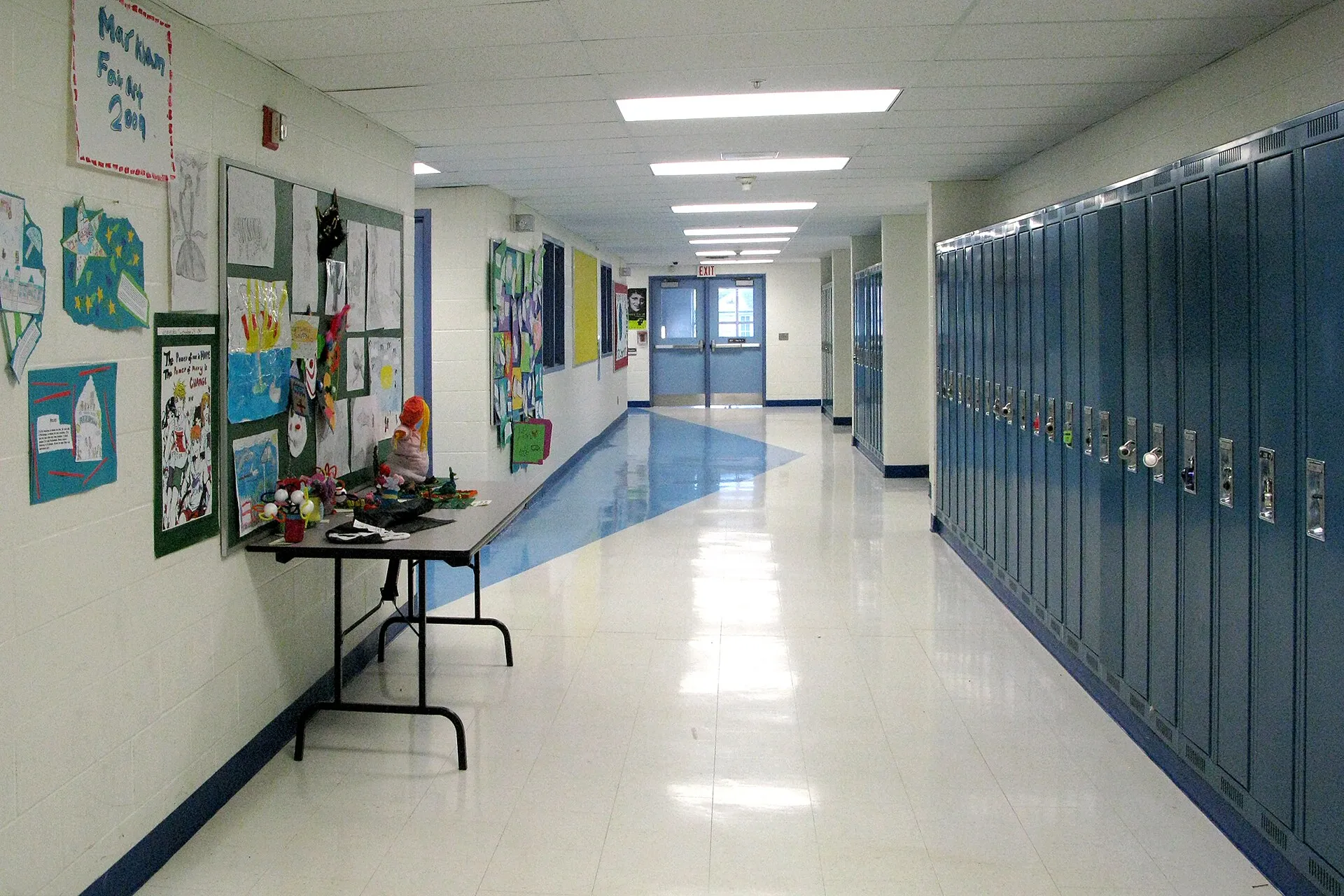
Photo: ChinaFlag / Public domain / Wikimedia Commons
Three children. One teacher. One pane of glass. Ground floor.
On October 15, 2026, a 16-year-old shot through the glass panels of a locked door at Silver Rail Elementary in Bend, Oregon, and entered the classroom immediately to the left. Every victim was in that room.
The school had cameras, a buzz-in entrance, and new classroom locks. It even had a second floor.
The kids in that room weren’t on that second floor.
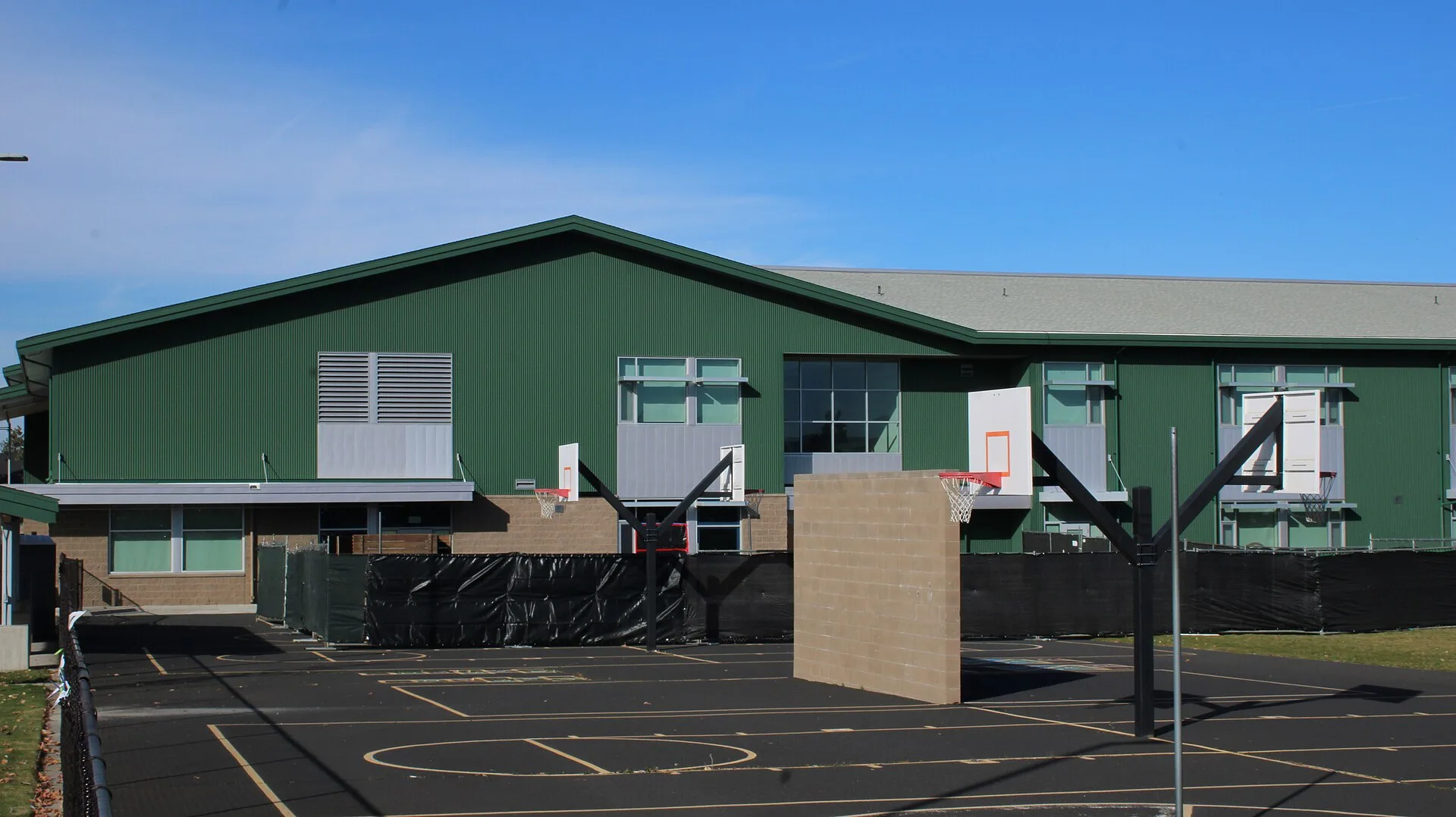
It keeps happening at the outside door
Locked doors are now the norm. In 2021-22, 97% of U.S. public schools reported controlling access to their buildings during the school day.
Attackers get through anyway. At Sandy Hook in 2012, the front doors were locked, so the gunman shot through the glass beside them. At The Covenant School in Nashville in 2023, the attacker shot through the glass of a locked side door. At Silver Rail, the same thing. At Robb Elementary in Uvalde, an exterior door had simply been left unlocked.
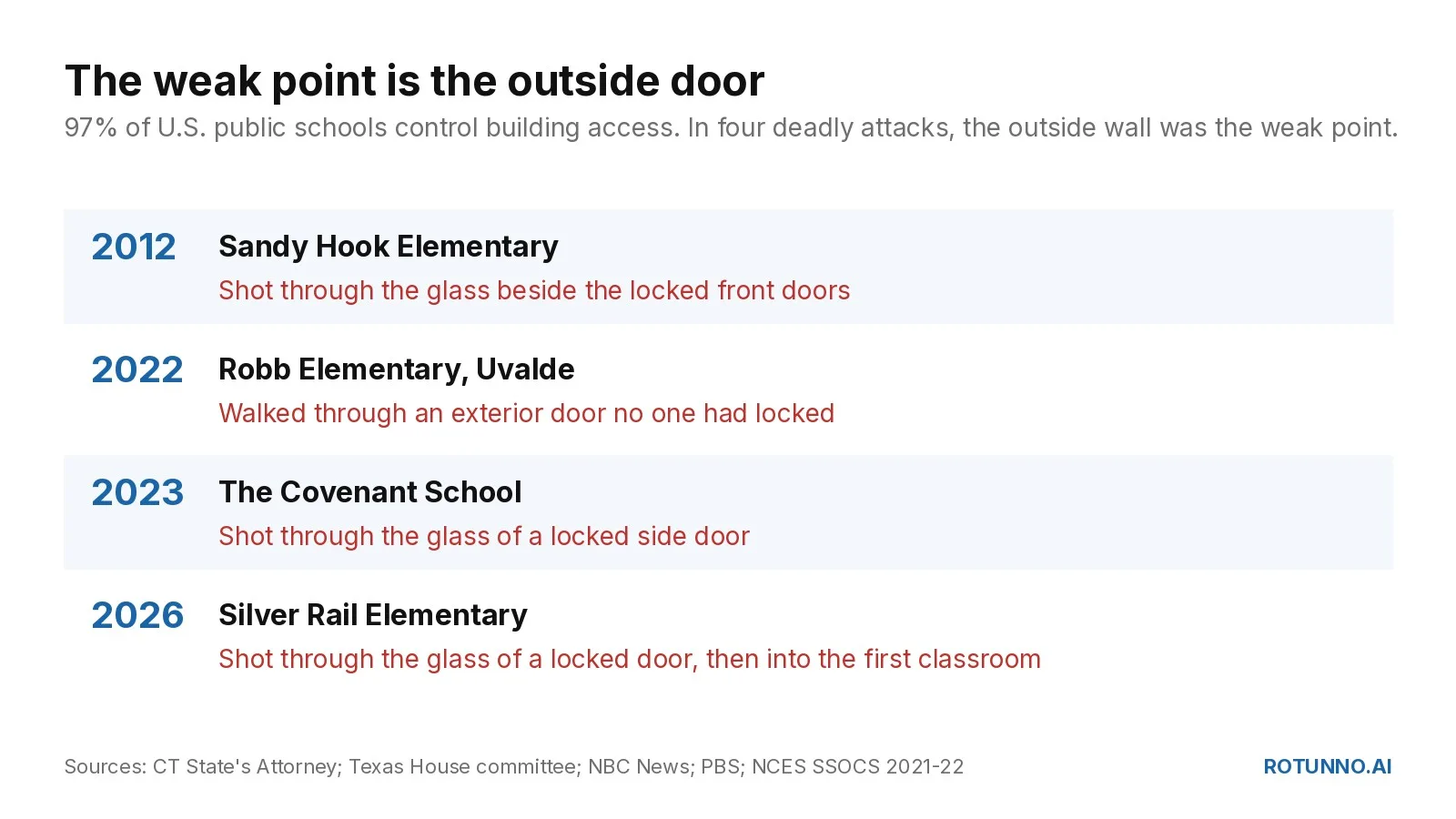
The lock is only as strong as the glass around it, and the people relying on it. What matters next is what sits right behind that door.
Change what’s behind the door
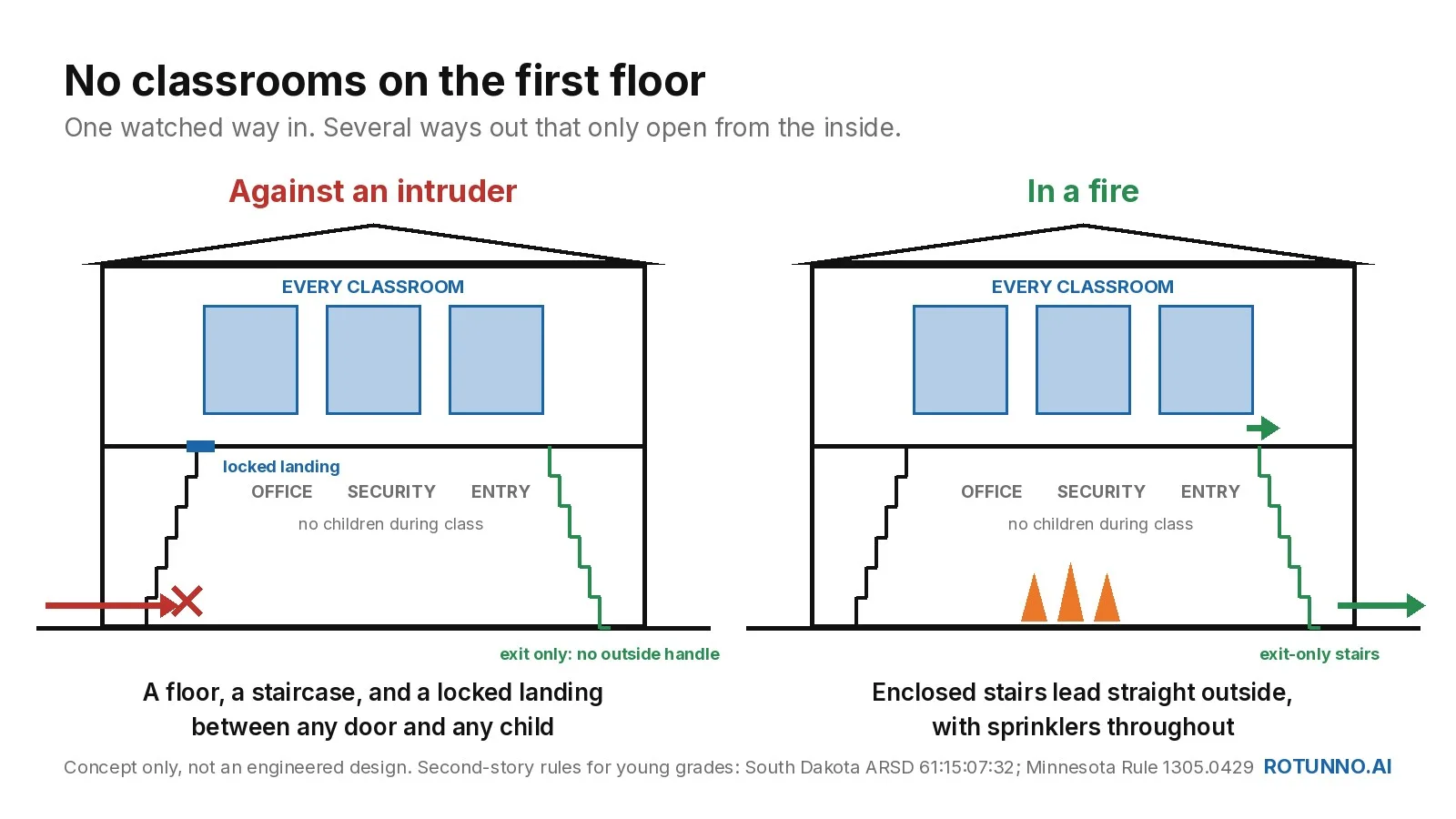
Make the ground floor the front office, security, and the entrance. Put every classroom upstairs, behind one watched way up.
It wouldn’t stop every attack. An attacker could already be inside, and stairs can be forced. But it would remove the setup at Silver Rail: a classroom one door from the outside. An intruder who breaks the glass finds the office and security staff, not a room full of children.
The gap: outside
A building can’t protect kids who aren’t in it. Recess, P.E., ball fields, dismissal, and fire drills all put children outside the walls.
That has been the target before. In 1989, a gunman walked onto the playground at Cleveland Elementary in Stockton, California, during recess, with about 300 children outside. Five were killed. In 1998, two boys at Westside Middle School in Jonesboro, Arkansas, pulled a fire alarm and shot students and teachers as they filed out. Four students and a teacher died.
This is where security staff belong. Instead of standing at a front door the building already protects, armed security can be posted where the walls can’t help: on the playground, at the fields, at pickup, and during drills. Play areas can also be fenced, or wrapped by the building itself as an inner courtyard.
Schools are already being built around this
This isn’t a fringe idea. Architects are already designing against attackers:
- Fruitport High School in Michigan spent $48 million on a renovation with curved hallways that limit a shooter’s line of sight, concrete walls to hide behind, a corner in every classroom that can’t be seen from the hall, and impact-resistant film on classroom windows.
- The new Sandy Hook Elementary opened with gated entrances, card readers, a staffed security vestibule, and classroom doors that lock automatically when they close.
Moving classrooms off the ground floor is the next step in the same direction.
”What about fire?”
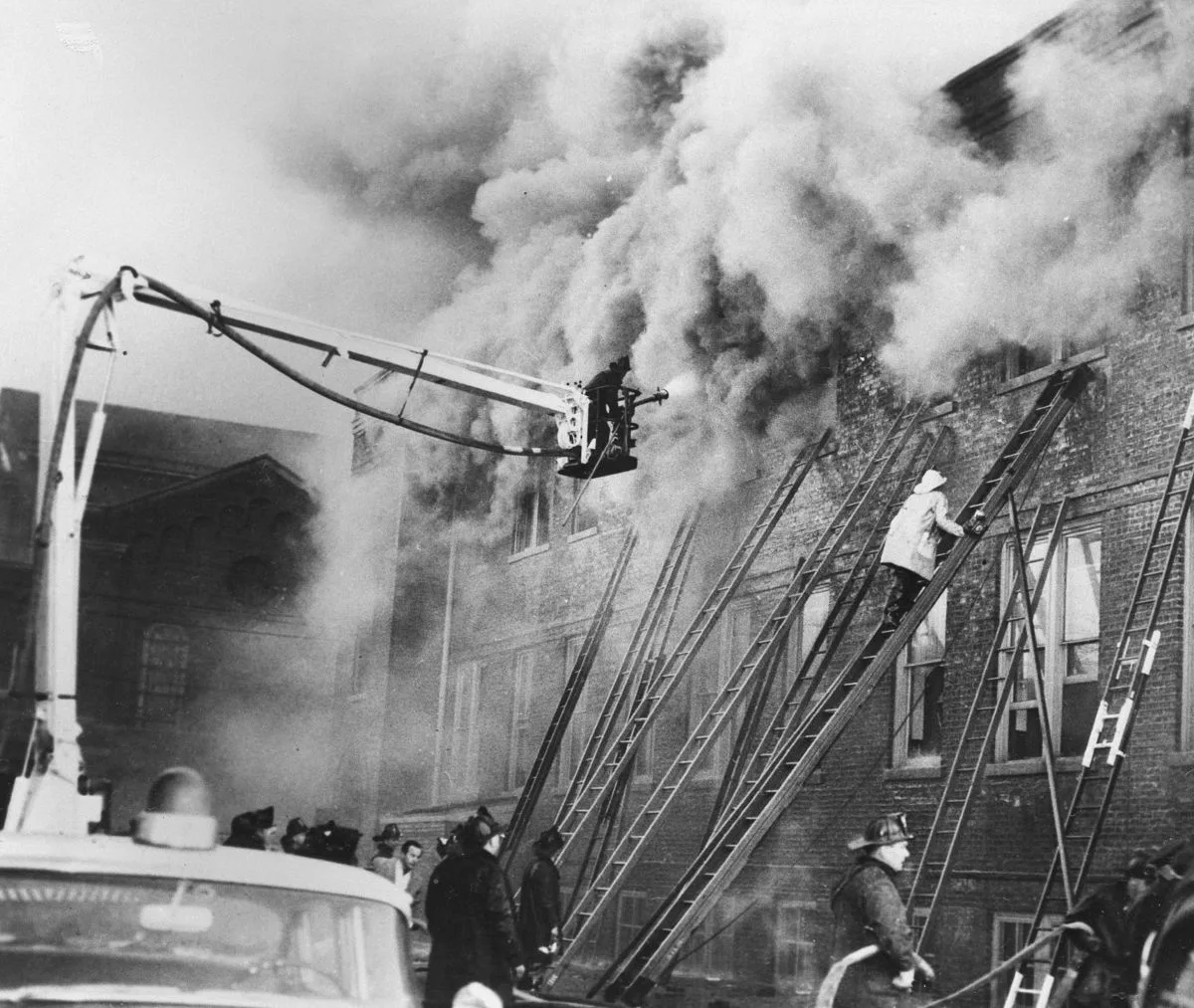
It’s the right question. In 1958, a fire at Our Lady of the Angels in Chicago killed 92 students and three nuns, all in second-floor classrooms. Fire-safety rules changed nationwide, and about 16,500 older schools were brought up to code within a year.
Codes have since made room for young children upstairs. South Dakota allows kindergarten through second-grade classrooms on a second story in fully sprinklered buildings with at least two exits straight outside. Minnesota allows them below the fourth story with sprinklers and smoke-detecting fire alarms. Building codes also let stair exit doors lock from the outside while opening freely from the inside.
Whether it fits a given school is a job for architects and fire officials. It also costs money: elevators, stairwells, and structure. Many existing schools can’t be retrofitted. This is a standard for the next school a district builds.
Who pays for it
Nobody gets a new school for free, so here’s where the money already comes from, and where this fits.
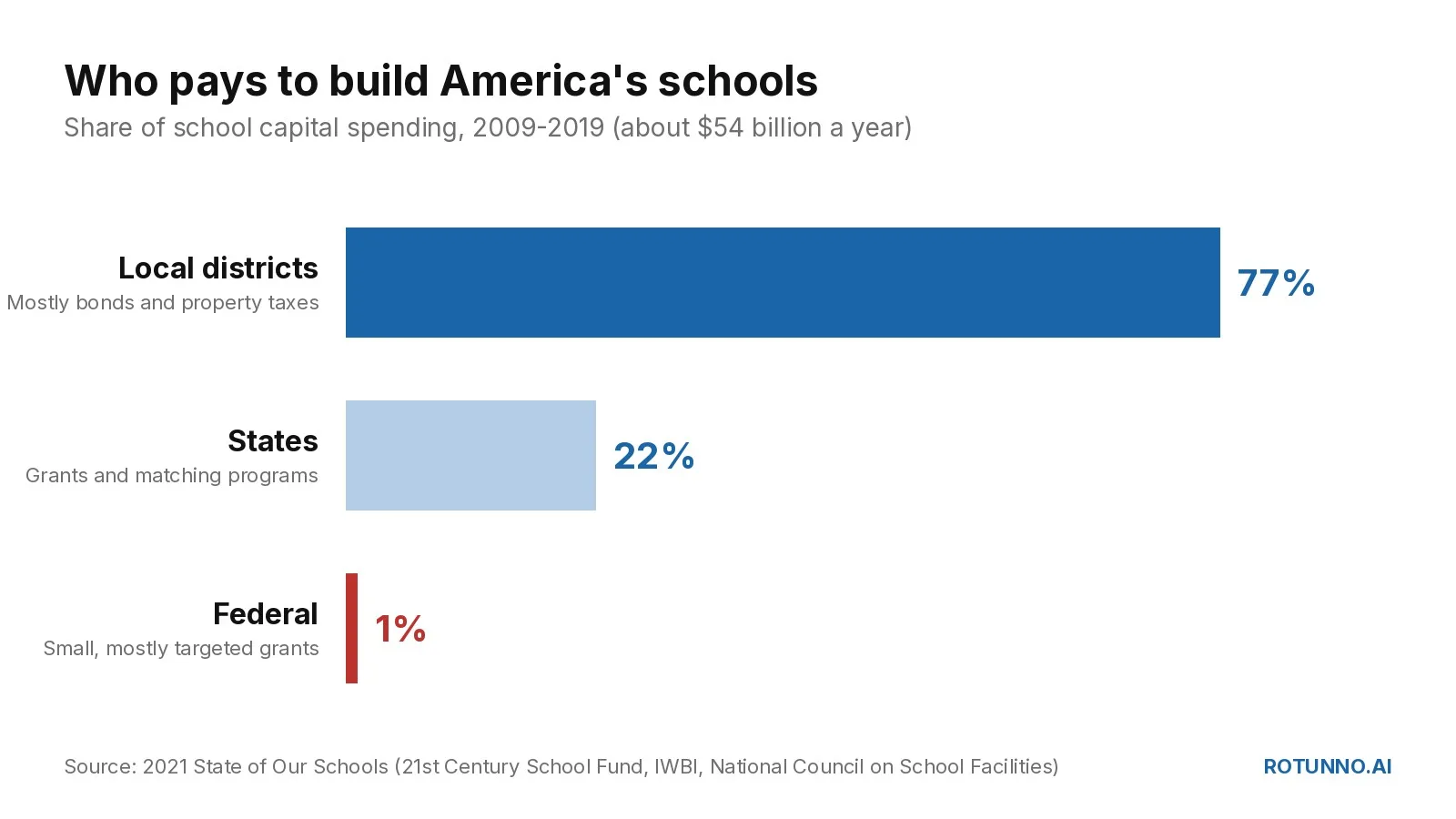
1. Build it into the bond that’s already coming. Local districts pay about 77% of school construction, mostly through bonds voters approve. Bend is a good example: Silver Rail itself was built with a 2013 bond, and voters approved more bonds in 2017 and 2022 that paid for safety work, including new door locks. A new school is going to be designed either way. Deciding where the classrooms go costs the least on the drawing board, before anything is built.
2. Let states reward the design. States already pay about 22% of school construction, and many attach rules to that money. They could add one: extra matching dollars for new schools that keep classrooms off exterior doors and meet the fire code upstairs. That’s how fire safety spread after 1958: a clear standard that new buildings had to meet.
3. Ask Washington to match, not mandate. Federal money covers about 1% of school buildings. The main federal school safety grant, STOP School Violence, totaled $83 million in its 2025 round for the whole country, mostly for training and threat assessment. A modest federal match for secure design in new construction would help the districts that can least afford it, without Washington drawing anyone’s floor plan.
None of this needs a new kind of tax. It steers money communities already spend toward a building that protects kids by design.
The ask
When your district plans its next school or its next bond, ask one question: does any classroom need a door to the outside?
Ask the architects to price an option with every classroom upstairs and check it against the fire code. Ask your state whether its school construction match rewards secure design. Then decide with it on the table.
The kids at Silver Rail were one door from the outside. The next ones don’t have to be.
Sources
- Silver Rail Elementary shooting: NBC News, “What we know”; PBS NewsHour, “Oregon school shooter attacked special education classroom”; CNN, Oct. 15, 2026; Wikipedia.
- Schools controlling building access: National Center for Education Statistics, School-Reported Safety and Security Practices, School Survey on Crime and Safety, 2021-22.
- Sandy Hook entry: Connecticut State’s Attorney report (Nov. 2013), summarized by CBS News and Campus Safety Magazine.
- Robb Elementary entry: Texas House Investigative Committee report (July 2022), full text via KSAT.
- Covenant School entry: NBC, “Three Children, Three Adults Killed in Mass Shooting at Christian School in Nashville”.
- Fruitport High School: American School & University; Spaces4Learning.
- New Sandy Hook Elementary: Building Design + Construction; Buildings.
- Our Lady of the Angels fire: Wikipedia; History.com.
- Second-story classrooms for young grades: South Dakota Admin. R. 61:15:07:32; Minnesota Rule 1305.0429.
- Stair exit doors locked from the outside only: International Building Code Section 1010, summarized by I Dig Hardware.
- Who pays for school buildings: 2021 State of Our Schools, 21st Century School Fund, International WELL Building Institute, and National Council on School Facilities.
- Bend-La Pine bonds and Silver Rail: States Newsroom, “In Bend, across state, voters have approved hundreds of millions for school safety”; OPB on the 2017 bond; KLCC on the 2022 bond.
- STOP School Violence Program: Bureau of Justice Assistance, FY25 overview.
- Stockton schoolyard shooting: CBS News, “Before Newtown, there was Stockton”; Wikipedia.
- Westside Middle School shooting: Encyclopedia of Arkansas.
Comments?
React, share it, or leave a comment below.
Write your thoughts?
No comments yet. Start the conversation.
Existing comments couldn't be loaded right now. You can still post one.